Missed a Few Listening Sessions? A Low-Pressure Way to Return
Choose one manageable next opportunity, remove one practical obstacle, then keep, change or stop—without catching up missed sessions.

Music Distracting You? A Sound-or-Silence Check for One Task
Compare one ordinary task without added audio and, if useful, one familiar quiet sound. Silence and stopping are valid outcomes.
Before You Press Play: An iPhone Headphone Checklist for Bedtime
Check audio output, Headphone Safety, listening exposure and the session endpoint before a defined pre-bed listen.
Nature Sounds or Pure Tone Before Bed? How to Choose
Choose a pre-bed listening experience by comfort, predictability and what you will willingly return to—not by an unsupported promise.

How to Refocus After an Interruption: A Short Restart Routine
Leave a ready-to-resume note, reduce the next distraction and return through one concrete action—with optional listening as a boundary, not a performance promise.

Waking Up Groggy? A Gentle Morning Routine Before the Day Starts
Protect the first groggy minutes, bring in appropriate light, begin with one prepared action and use optional audio only as a routine cue.

How to Sleep After Night Shift: A Wind-Down Routine for Daytime Rest
Make the trip home safe, reduce light and stimulation, prepare the room and use one short, repeatable cue before daytime sleep.
How to Leave Work at Work: An End-of-Day Transition Routine
Capture unfinished work, define when you will return to it, close the work channel and give personal time one clear beginning.
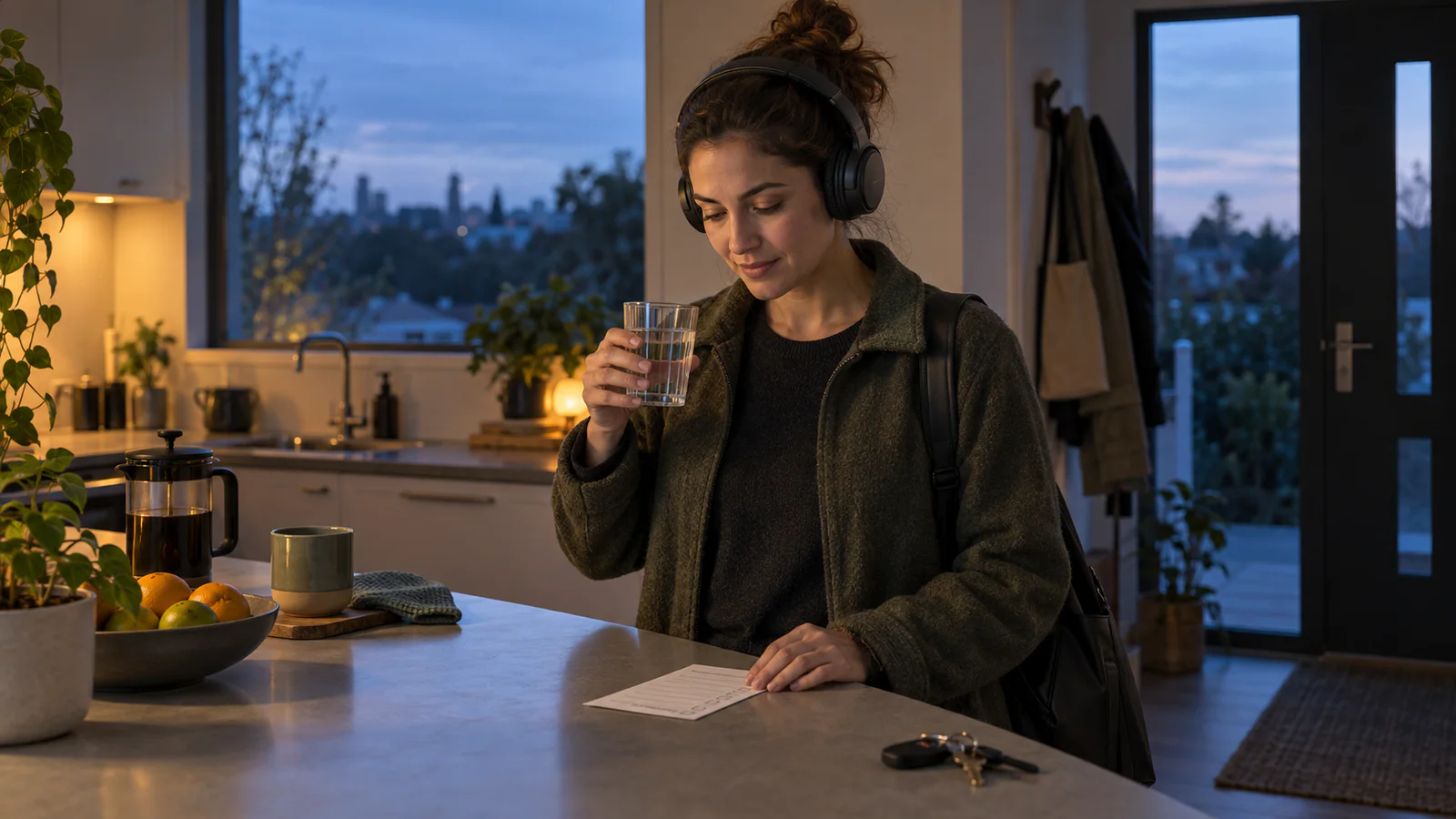
A Morning Routine for Changing Work Start Times
Anchor a short start-of-day sequence to waking rather than one clock time, while keeping sleep and safety ahead of productivity rituals.
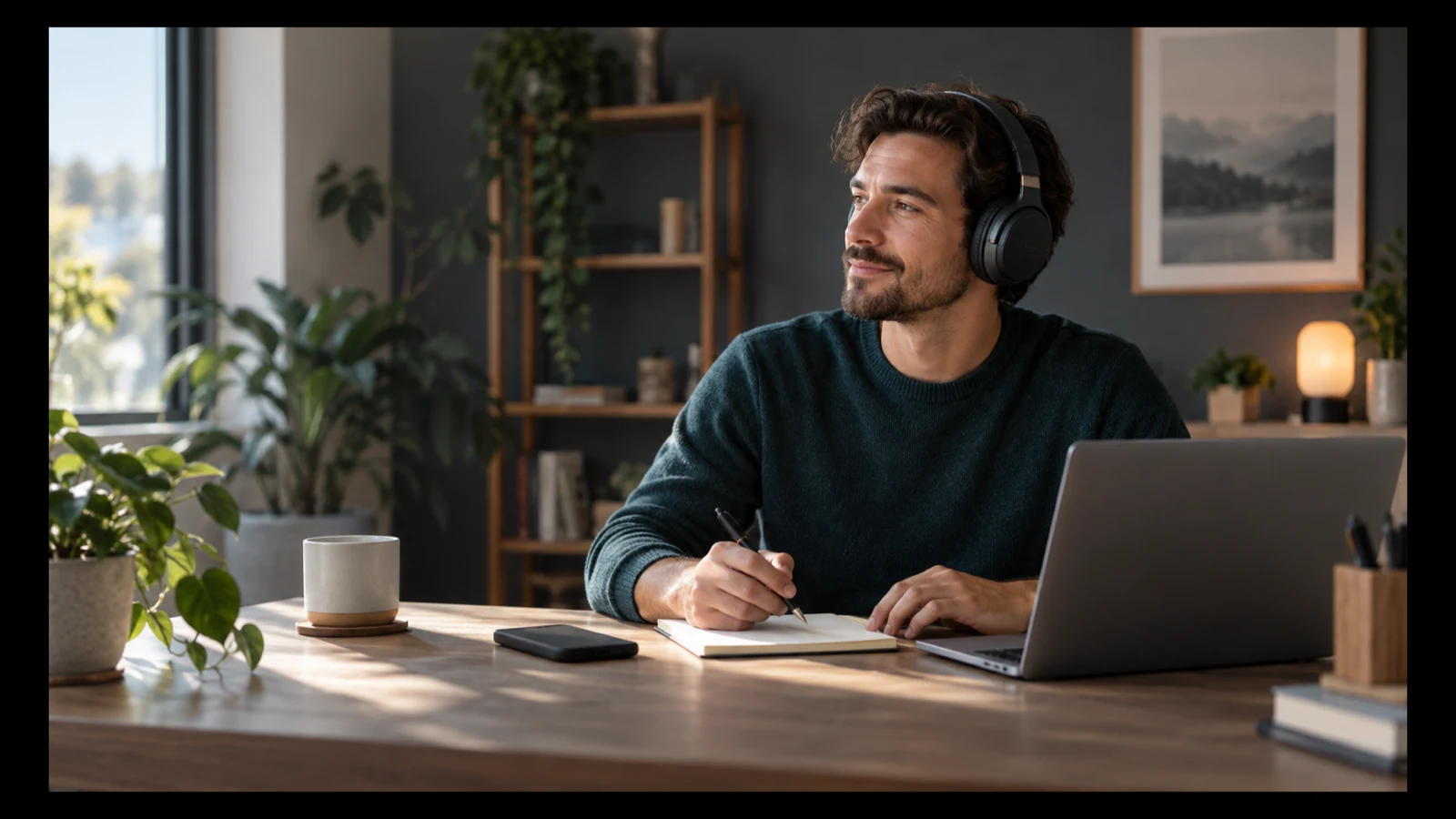
Focus Session Setup Checklist: One Task, Fewer Interruptions
Choose one finish line, reduce the interruptions you can predict, prepare headphones safely and leave yourself a clear restart cue.
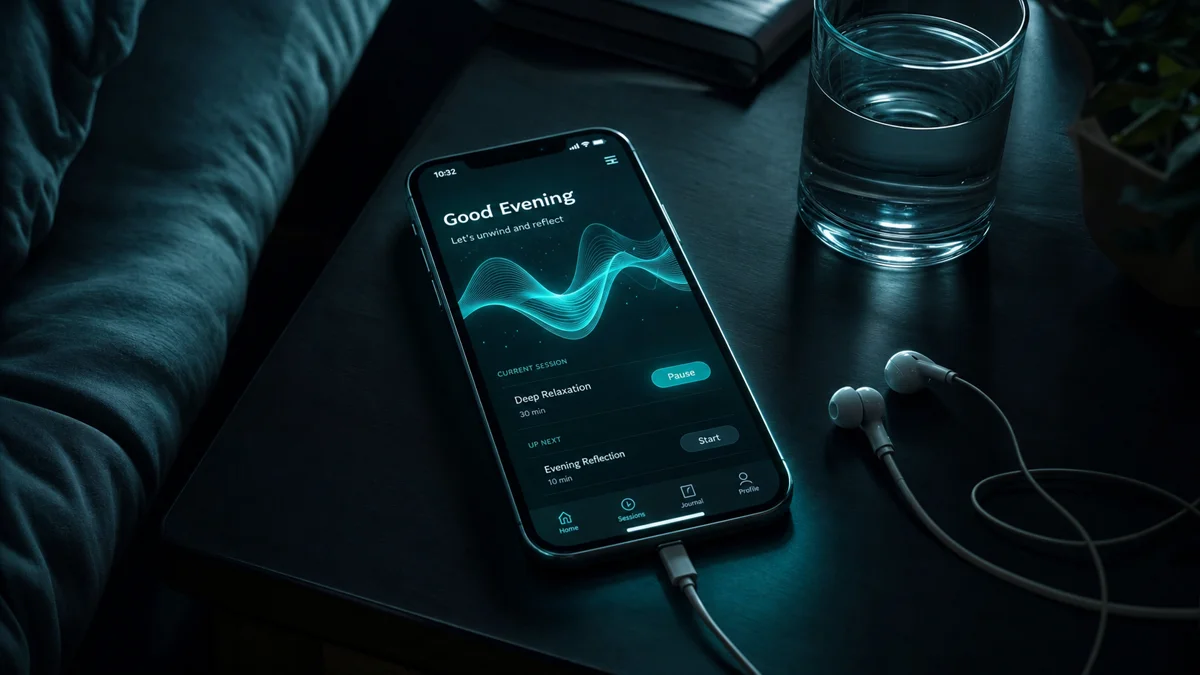
Tihna vs Brain.fm vs Endel: Which Listening App Fits?
Compare a finite stereo-headphone routine, functional music and adaptive soundscapes by setup, session style and the experience you are likely to return to.
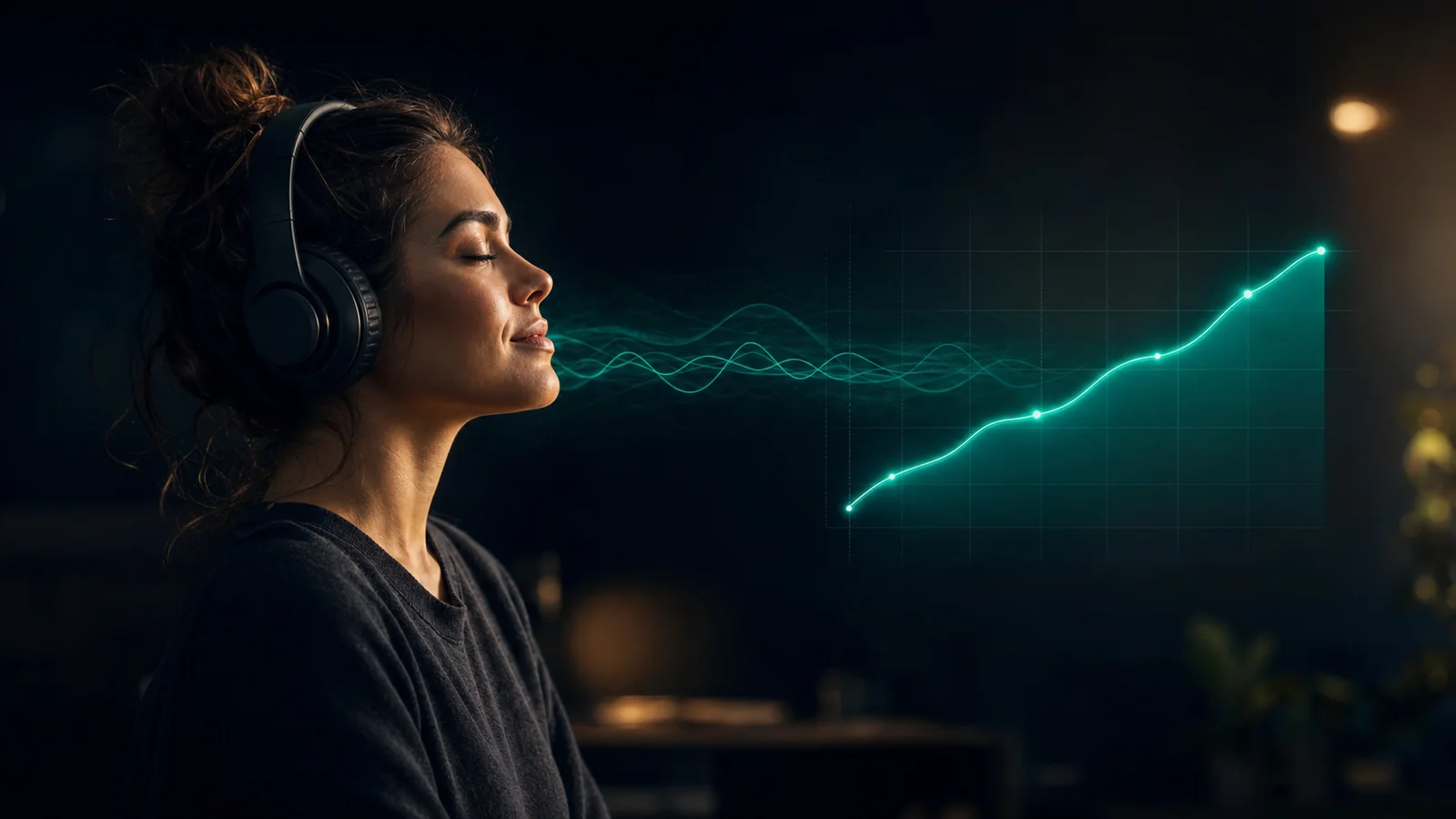
How Long Do Brain Frequencies Take to Work? What 8 Studies Actually Show
What single-session and repeated-session studies can—and cannot—tell you, and why Tihna's four weeks are a product structure rather than a promised outcome timeline.
Inside Tihna 1.3.0: The Audio Engineering Behind a Cleaner Beat
Version 1.3.0 shipped a real critical-band notch, proved the sub-octave drone can't leak into the spatial-motion path, and added Morning as a fourth pillar.
How to Fall Asleep Faster: The Science of 6 Hz Theta Frequencies
A 2024 Oxford study cut sleep onset from 12.5 to 6.1 minutes using structured neural audio. Here's the neuroscience behind why beta-dominant brains struggle to fall asleep.
Natural Anxiety Relief Without Medication: What the Research Actually Shows
A 2026 RCT reduced the sedative dose needed for loss of consciousness — one of the most objective anxiety-adjacent measures possible. What a 1 Hz delta beat did, and what it did not show.
Why You Can't Sleep Even When You're Exhausted: The Wired-But-Tired Brain
Chronic beta-wave dominance keeps the brain alert long after the body gives up. Here's the cortisol mechanism — and why one-night fixes don't solve it.
Best Sleep Apps in 2026: An Honest Comparison (Including the Science)
Headspace, Brain.fm, Moongate and Tihna compared by listening style, structure, setup and current product fit, without claiming clinical superiority.
40 Hz Gamma Waves and Focus: What the Science Says About Your Brain's Performance State
Gamma oscillations at 40 Hz are the brain's primary frequency for working memory, executive function, and information integration. A 2025 review confirms what EEG studies have shown for decades.
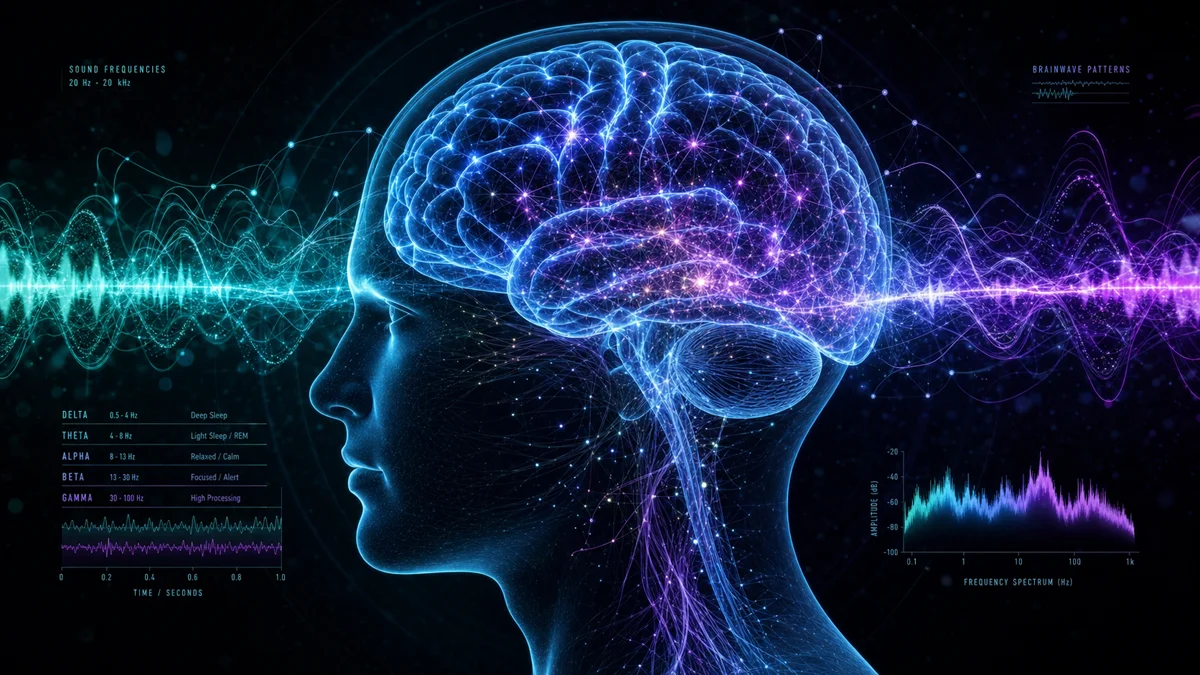
What Are Neural Frequencies? A Plain-English Guide to How Sound Affects Your Brain
Delta, theta, alpha, beta, gamma — what they mean, how the auditory pathway connects sound to brain state, and why 4-week structured protocols outperform single-session tracks.

How to Improve Focus Without Caffeine: 5 Evidence-Based Methods
Cold exposure, exercise, sleep quality, digital boundaries, and a 40 Hz gamma protocol. Five approaches with genuine peer-reviewed support — one targets the exact neural frequency of focused cognition.
Does Sound Therapy Actually Work? What 40+ Peer-Reviewed Studies Say
An honest, evidence-stratified review: strong evidence, moderate evidence, and what has zero scientific backing. The wellness space is full of sound — not all of it is signal.
Sleep Anxiety: How to Break the Cycle of Lying Awake Worrying
Conditioned hyperarousal — not willpower — keeps you awake. Why CBT-I has an access problem, and how a sequential alpha-then-theta protocol breaks the anxiety-insomnia loop.
How to Wake Up With Energy Without Caffeine: The Beta Wave Morning Protocol
Sleep inertia is a neuroscience problem, not a willpower problem. What 15 Hz beta protocols have actually been shown to do, and what nobody has tested yet.
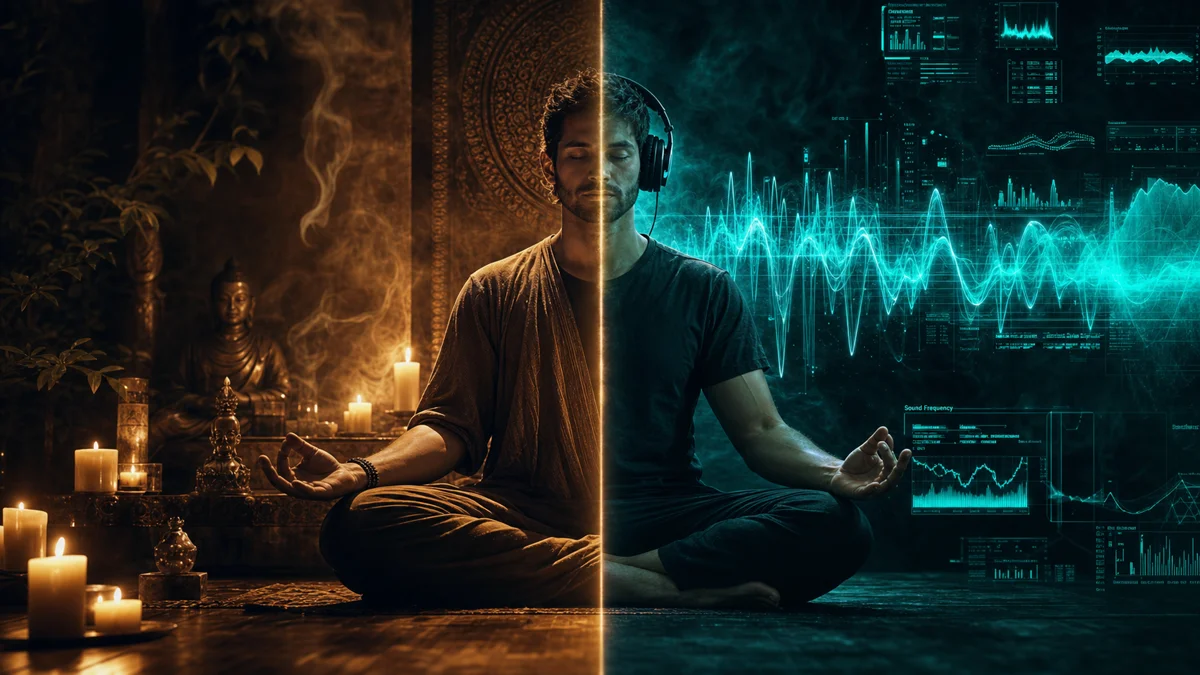
Meditation vs Neural Frequency Programs: Which Is Better for Stress and Sleep?
Meditation has 78% dropout rates in trials. Frequency programs require no mental effort. Both target the same theta-alpha states — the evidence increasingly supports using them together.
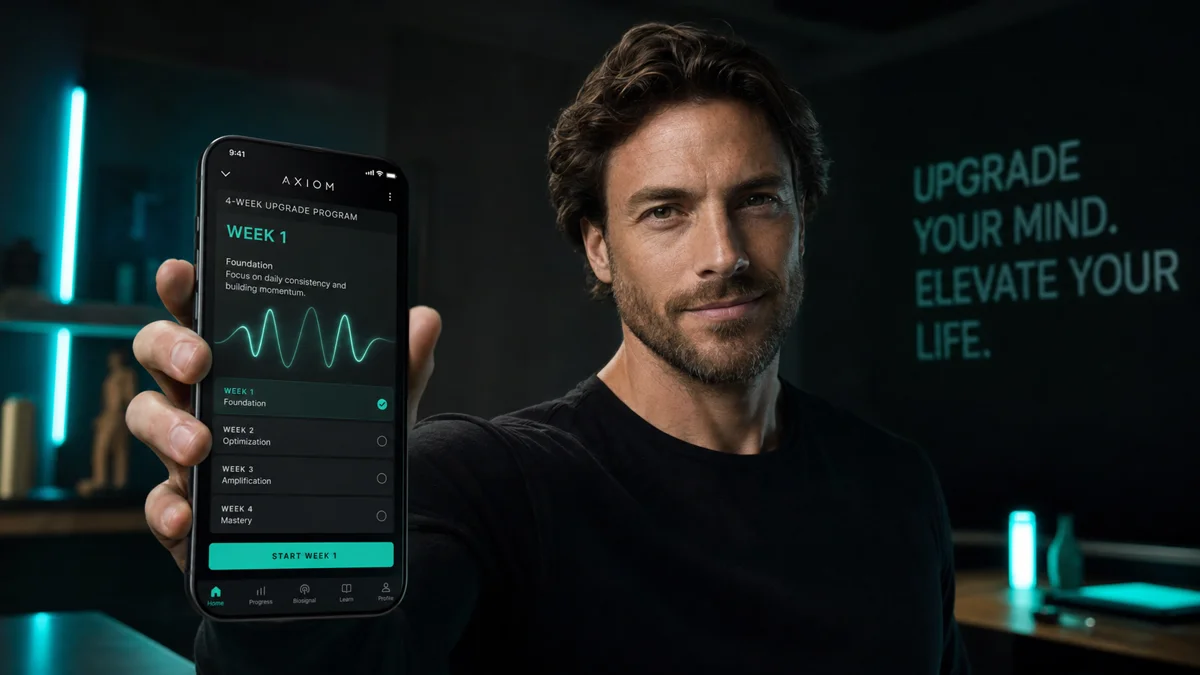
Looking for a Headspace Alternative in 2026? Here's What's Actually Different
Why people leave guided meditation apps — and what they're really searching for. Tihna vs Headspace: a frank side-by-side including the science behind both approaches.