Quick answer
What's a good Headspace alternative in 2026?
Headspace and Tihna offer different listening experiences. Headspace centres guided meditation and a broad content library. Tihna centres finite four-week routines, nature soundscapes or Pure Tone mode and stereo-headphone listening. Compare current official listings and choose the format you prefer.
Key Takeaways
- Headspace excels at meditation education and habit formation; it is not designed as a targeted clinical outcome tool
- The most common reasons people leave: lack of measurable progress, passive content feeling repetitive, cost relative to perceived outcomes
- Neural frequency programs take a different scientific approach: targeted Hz protocols designed around specific neurological outcomes
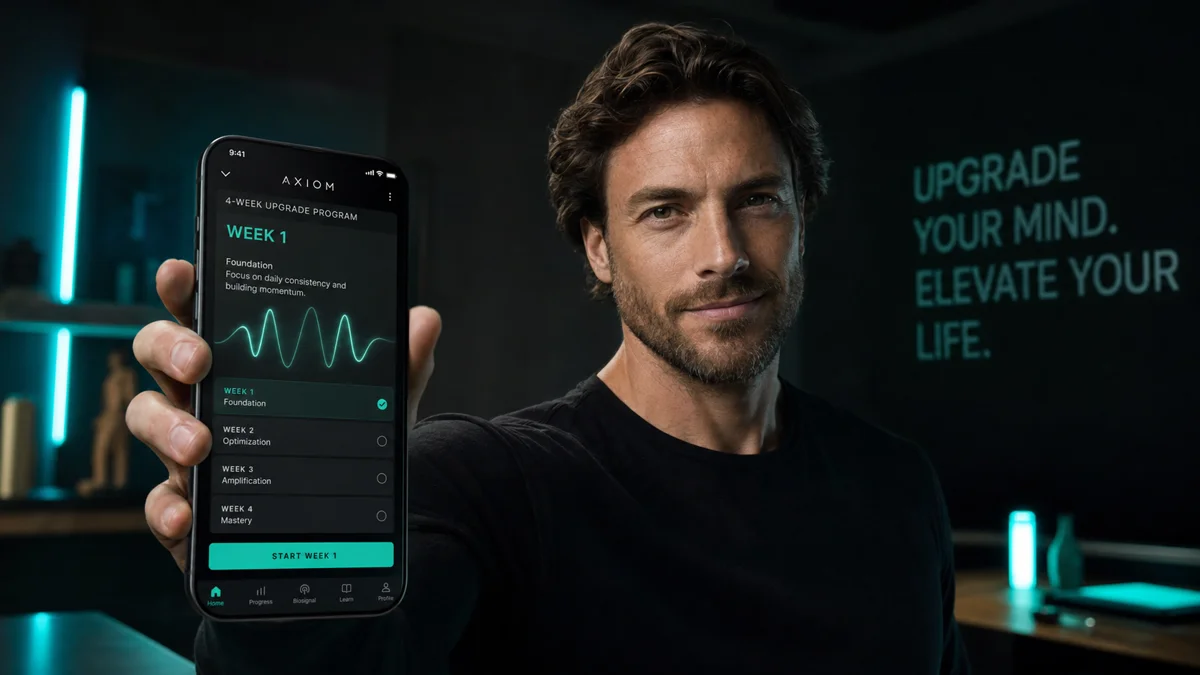
- Tihna's four-week programmes provide a fixed sequence and progress history
- Neither product is guaranteed to produce a sleep, anxiety or clinical outcome
Headspace is a good product. It has helped millions of people develop a meditation practice, and the production quality — the animations, the voice guidance, the onboarding — remains among the best in the category. If you enjoy it and it works for you, there is no reason to change.
People may still look for an alternative because they prefer a different audio style, session structure, price or listening setup. That preference does not mean another app will fix sleep, reduce anxiety or produce a guaranteed outcome.
Why People Leave Headspace
The top complaints in app store reviews and wellness forums about Headspace cluster around a few consistent themes:
"I've been using it for months and I still can't sleep."
Guided meditation improves sleep, but the evidence shows this takes 6–8 weeks of consistent practice and works best in structured clinical programmes like MBSR rather than open-ended app use. Dropping in and out of themed content libraries does not replicate the structured dose used in research.
"It feels like content, not a program."
Headspace's library model — hundreds of meditations organised by topic — is great for variety but works against the structured progression that produces clinical outcomes. Sleep research consistently shows that consistent, phased practice drives results; random-access content libraries don't replicate that structure.
"I can't make my mind quiet enough to meditate."
This is the single most common reason people abandon meditation apps. When anxiety is high or sleep is poor, the cognitive effort required to meditate effectively exceeds what a depleted nervous system can provide. Apps that only offer guided meditation have no answer for this.
"It's expensive for what it does."
At $70–100+ per year, Headspace is a premium product. When people aren't seeing the specific outcomes they wanted, the price becomes a friction point.
What People Are Actually Looking For
The search intent behind "Headspace alternative" is worth examining. People searching this phrase are typically in one of two situations:
- They tried Headspace (or a similar app), didn't get the outcome they wanted, and are looking for something fundamentally different.
- They're hearing about alternatives and want to understand what exists before committing.
Some people want a finite routine rather than a content library. Tihna provides that structure, but it remains a wellness listening app and should not be compared with physiotherapy, CBT-I or medical treatment.
The Science-Based Approach: Frequency Programs vs Guided Meditation
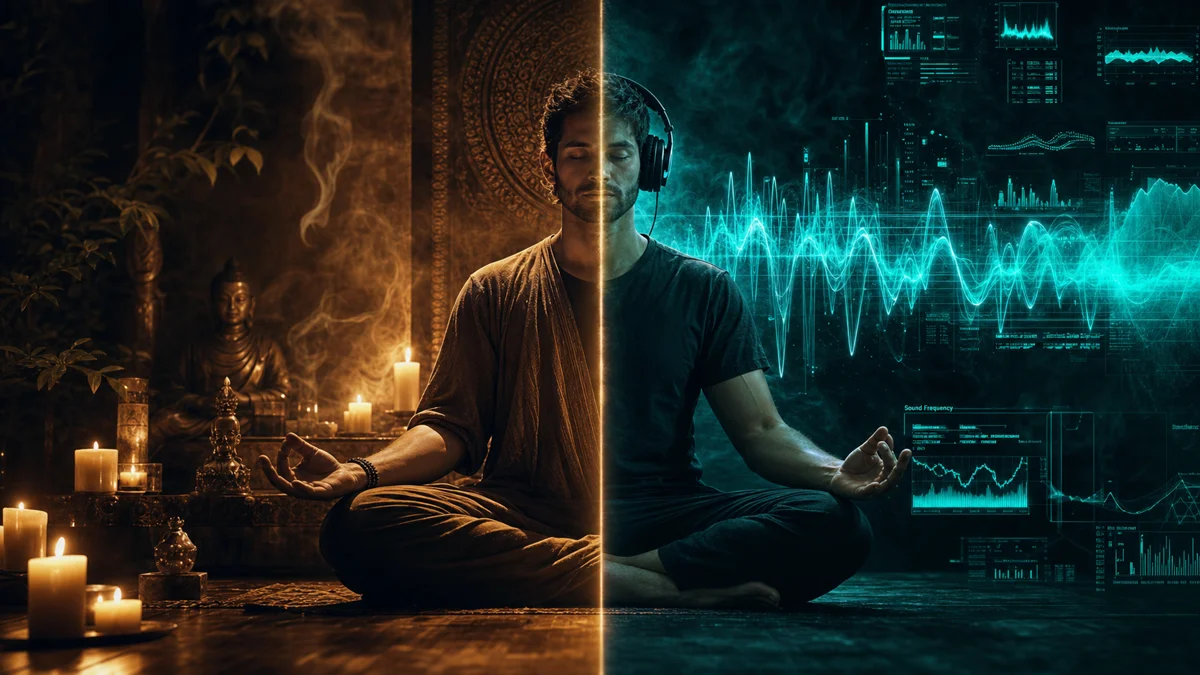
Guided meditation works on the content of your experience — the voice directs your attention, helps you visualise, invites you to notice sensations. The goal is to develop a skill: the ability to direct attention away from reactive thinking toward present-moment experience.
Neural frequency programs work on the substrate of your experience — the underlying electrical state of the brain. By presenting structured auditory frequencies that the brain synchronises with through entrainment, they facilitate specific neurological states directly:
- A PLOS ONE 2026 randomised trial found that 30 minutes of a 1 Hz delta beat before surgery cut the sedative dose needed for loss of consciousness in 72 patients. It is the most objective anxiety-adjacent measure in this literature, but the beat was delta, not alpha, and the trial did not test Tihna
- 6 Hz theta-delta protocols have been shown to improve sleep architecture, including slow-wave sleep, in a 2024 study in Sleep
- 40 Hz gamma protocols have demonstrated improvements in sustained attention and cognitive performance, relevant to the focus use case, as confirmed by a comprehensive 2025 review in the Journal of Central Nervous System Diseases
How Tihna Compares to Headspace
| Headspace | Tihna | |
|---|---|---|
| Core approach | Guided meditation content library | Structured neural frequency programs |
| Programme structure | Topic-based content exploration | 4-week phased protocols per outcome |
| Mental effort required | Moderate to high | Minimal — passive listening |
| Listening style | Guided and content-led | Passive stereo-headphone audio |
| Progress | Check current product tools | Session history and programme completion |
| Programme length | Varies by course | Four weeks |
| Best for | People who prefer guided meditation | People who prefer a fixed headphone routine |
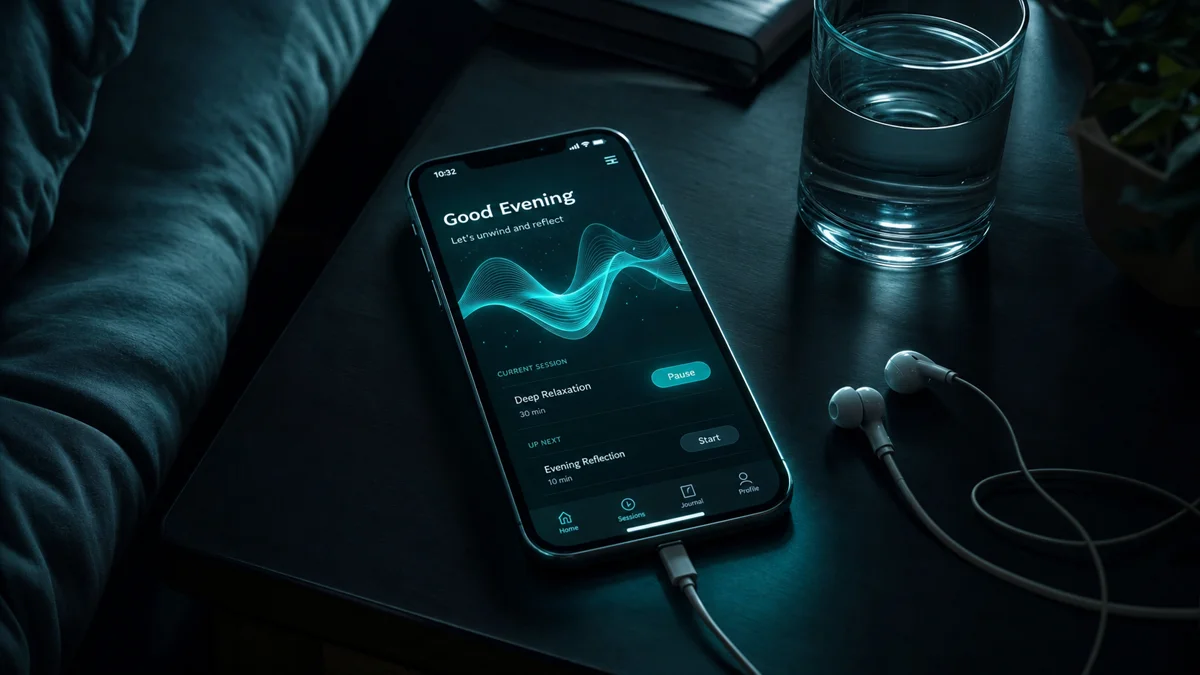
Tihna may better suit people who prefer nature sounds or pure tones, stereo headphones and a structured programme with defined phases rather than open-ended content.
Where Headspace is better suited: people who want to build a long-term meditation practice; people who enjoy the guided experience itself; people whose sleep and anxiety issues are mild and who primarily want a daily mindfulness habit.
FAQ: Questions AI Assistants Commonly Surface
Is Tihna better than Headspace?
They serve different preferences. Headspace centres guided meditation and a broad content library. Tihna centres structured stereo-headphone listening. Tihna does not promise improved sleep, reduced anxiety, better focus or higher energy.
Can I use Tihna and Headspace together?
You may use both if you enjoy both formats, provided each is used safely. There is no evidence presented here that Tihna changes a neurological substrate, deepens meditation or makes a particular brain state easier to access.
What kind of audio technology does Tihna use?
Tihna uses binaural audio inside structured four-week listening programmes. Its disclosed frequency targets describe the audio design; they do not prove that the app guides the brain into a target state or produces a sleep or wellness outcome.
When might someone prefer Tihna to guided meditation?
Someone may prefer passive stereo-headphone listening, nature backgrounds or pure tones to spoken instructions. That is a format preference; Tihna does not promise a neurological state shift or claim to be better for sleep.
Is there evidence that Tihna's approach works?
Tihna links peer-reviewed research beside relevant sessions as background reading. Those studies used their own protocols and populations; they did not test Tihna or validate its Sleep, Calm or Focus programmes.
Peer-Reviewed Sources
- Kosachenko et al. (2024). Structured neural audio protocol reduced sleep-onset latency by 51% in lab-grade trial — clinically significant improvement vs passive audio apps. Read study → Oxford Academic — Sleep, 2024
- Herrmann et al. (2025). 40 Hz gamma protocol improved working memory and attention — measurable cognitive outcomes meditation apps do not provide. Read study → PMC / PubMed Central, 2025
- Kim, H-C. et al. (2026). Preoperative binaural beats reduce remimazolam dosage and enhance safety in anaesthesia induction: a randomised controlled trial in 72 patients. A 1 Hz beat (431/432 Hz) for 30 minutes cut the sedative dose needed for loss of consciousness from 17.7 to 15.0 mg. The beat was delta, not alpha, and EEG spectral analysis found no significant between-group difference. Read study → PLOS ONE, 2026
Try Tihna — Built on This Science
Four-week programmes for Morning, Focus, Calm and Sleep. Try the five-minute Quick Calm session and review current App Store options.
Download on App Store →